The B2B market is far bigger than the B2C market, and it is not close. Global B2B ecommerce runs somewhere in the $25 to $30 trillion range, while global B2C ecommerce sits closer to $5 to $6 trillion. That makes business-to-business roughly five to six times larger by transaction value, even though most people never see a single B2B sale happen. The reason is simple: every consumer product rides on top of a long chain of business transactions, and all of those count.
Market-size estimates vary by source and by how you define the market, so treat any single figure as a range, not a fact carved in stone. The consistent finding across analysts is the direction of the gap. B2B is the larger market, by a multiple, every time.
| Dimension | B2B | B2C |
|---|---|---|
| Global ecommerce value (est.) | ~$25 to $30 trillion | ~$5 to $6 trillion |
| Relative size | Roughly 5 to 6x larger | Baseline |
| Number of buyers | Small, concentrated | Massive, fragmented |
| Average transaction value | High (thousands to millions) | Low (tens to hundreds) |
| Transaction volume | Fewer, larger deals | Many, small purchases |
| Visibility to public | Mostly invisible | Highly visible |
The table holds the whole story. B2B wins on total value because each deal is large. B2C wins on sheer count of transactions because billions of people buy small things constantly. Two different shapes of market, and they get measured differently depending on whether you count dollars or transactions.
Walk a single consumer product backward and the reason becomes obvious. A phone on a store shelf is one B2C sale. Behind it sits the retailer buying from a distributor, the distributor from the manufacturer, the manufacturer buying chips, glass, batteries, and assembly equipment, the chipmaker buying silicon and lithography tools, and software vendors licensing to all of them. Every arrow in that chain is a B2B transaction.
One $1,000 consumer purchase can represent many thousands of dollars in upstream B2B activity. Multiply that across every product in the economy and the B2B total has to be larger. It is the part of commerce that happens before the shelf.
This is also why B2B feels smaller than it is. Nobody sees a logistics contract get signed or a SaaS renewal close. The transactions are private, large, and dull to outsiders, which is exactly why they add up to the bigger number.
A bigger market does not mean bigger marketing budgets, and this trips people up. B2C brands often spend a higher percentage of revenue on marketing because they are chasing awareness across millions of strangers. B2B spends less as a share of revenue, then concentrates that spend on a much smaller, much more valuable audience.
The math drives the difference. A B2C company might have hundreds of millions of potential buyers, so broad reach and brand advertising pay off. A B2B company selling enterprise software might have 3,000 realistic accounts on the entire planet. Spraying ads at the general public would be a waste. Precision beats reach.
That single constraint, a small and named buyer pool, explains most of what makes B2B marketing distinctive: account-based campaigns, sales-led outreach, deep technical content, and a heavy reliance on events. When your whole market could fit in a few conference halls, you go to the conference halls.
The market-size gap is the root of nearly every tactical difference between the two:
If you want the marketing version of this comparison in detail, our guide to B2B content marketing breaks down how the small-audience constraint reshapes what you publish and why.
The reason B2B vs B2C market-size figures look contradictory across sources is that people measure two different things and call both "size." Measure by dollars and B2B wins easily, since each deal is large. Measure by number of transactions and B2C wins, because billions of people make small purchases every day.
Both are true at once. A single enterprise software contract might equal the dollar value of 50,000 individual coffee purchases, but it is one transaction against 50,000. So when an analyst says one market is "bigger," check the unit. By gross merchandise value, B2B leads. By count of buyers and orders, B2C leads by orders of magnitude.
This matters for strategy more than it looks. If your market's size comes from a few large transactions, losing one deal moves your number a lot, and your marketing should protect and win specific accounts. If your size comes from millions of small transactions, no single buyer matters much, and your marketing should optimize conversion rate at scale. B2B sits firmly in the first world. That is why a B2B team will spend weeks chasing one logo that a B2C team would never notice.
Here is the part the market-size numbers set up. Because the B2B buyer pool is concentrated, a single event can put a meaningful slice of a company's entire addressable market under one roof. There is no B2C equivalent. You cannot gather a representative chunk of all consumers in a convention center, but you absolutely can gather most of the decision-makers in a niche B2B category.
That is why B2B teams pour budget into sponsoring and speaking at the right conferences. A well-chosen event is not a branding exercise. It is direct access to the small, high-value market that the trillion-dollar B2B figure is actually made of. The trick is picking events where your specific buyers gather, not the ones with the biggest logos.
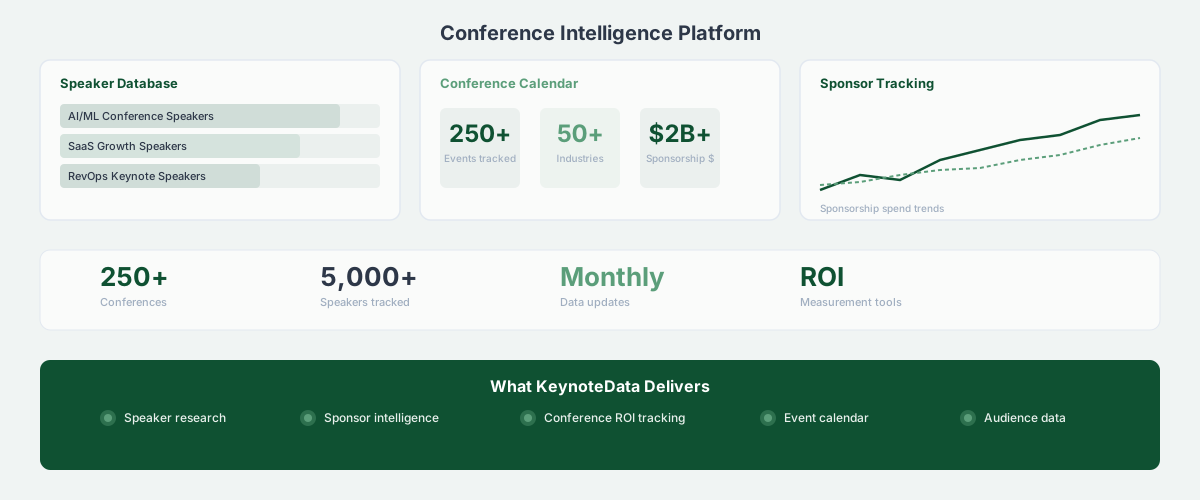
The most reliable public signal of who attends an event is who speaks at it. If companies from your target account list send speakers, their teams are in the building. KeynoteData's speaker database lets you check that across the top B2B conferences before you commit budget, and our conference marketing strategy guide covers how to turn that access into pipeline.
The B2B market is the larger one, but it is larger in a specific way: big dollars spread across a small number of high-value relationships. That shape, not the headline trillion-dollar number, is what should drive your strategy. You are not fishing in an ocean of consumers. You are working a defined list of accounts that you could, in theory, name.
Once you see the market that way, the rest follows. Spend less on reach, more on precision. Invest in the channels that concentrate your buyers, with events near the top of the list. The size of the B2B market is impressive on a slide. What matters is that your slice of it is small enough to target one account at a time.
A preview of where B2B decision-makers actually gather.
| Name | Title | Company | Level | Conference(s) | |
|---|---|---|---|---|---|
| Aaron Levie | CEO | Box | C-Level | SaaStr Annual | LinkedIn ↗ |
| Yamini Rangan | CEO | HubSpot | C-Level | INBOUND,SaaStr Annual | LinkedIn ↗ |
| Kerry Cunningham | Head of Research & Thought Leadership | 6sense | Head of | INBOUND,6sense Breakthrough | LinkedIn ↗ |
Showing 3 of 887 speakers. Get full access to filter and export by account and seniority.
887 speakers, 487 sponsors, 13 conferences. See which accounts gather where, then put your team in the room.