A three-day conference generates more raw content than most marketing teams produce in a quarter. Keynotes, breakout sessions, panel discussions, hallway conversations, booth demos. All of it is raw material. But most teams treat conference content as disposable. They live-tweet a few sessions, maybe write a recap blog post, and let the rest evaporate. The companies that get the most value from conferences have a system for turning that raw material into months of content across every channel.
Conferences produce high-quality content at scale. The speakers are experts. The topics are current. The insights are fresh. A single 30-minute session at INBOUND or SaaStr Annual can contain 5-10 distinct ideas, data points, or frameworks that your audience cares about.
The problem is not a lack of material. It is a lack of systems. Most teams do not have a plan for capturing, organizing, and repurposing conference content. They attend the sessions, take some notes, and move on. Six months later, those notes are buried in a Google Doc nobody opens.
The fix is straightforward: build a capture system before the conference and a publishing calendar after it. Here is the complete workflow.
Before the event, review the session schedule and identify the 8-12 sessions most relevant to your audience. Use the speaker database to research the speakers. What have they written about before? What is their expertise? This pre-research helps you take better notes because you know what to listen for.
Assign team members to specific sessions. If your team has 3 people at the conference, each person covers different sessions. Create a shared document or channel where everyone posts their notes in a consistent format:
This structured note-taking is the foundation. Without it, you are relying on memory, and memory fades fast.
Notes. Use the structured format above for every session you attend. Be specific. "Great talk about content strategy" is useless. "Speaker showed data: companies that publish 2x/week see 3.5x organic traffic vs. 1x/week, based on analysis of 500 B2B SaaS blogs" is a content goldmine.
Photos and video. Take photos of key slides (the ones with data, frameworks, or quotable statements). If the conference allows recording, capture short video clips of your team reacting to sessions, walking the floor, or meeting with speakers. Even 15-second clips shot on a phone are useful for social content.
Real-time social posts. Post insights as they happen. A single-sentence takeaway from a session, tagged with the conference hashtag and the speaker, gets immediate engagement because the conference audience is online during the event. These real-time posts become the seeds for longer content later.
Hallway conversations. Some of the best content comes from conversations outside the sessions. When someone shares an interesting perspective at your booth, at dinner, or between sessions, note it down (with their permission if you plan to quote them). These anecdotes add authenticity to your content that polished session summaries lack.
After the conference, take your notes and run them through this framework. One session becomes multiple pieces of content across channels.
Conference recap post. The simplest format. "5 Takeaways from [Conference]" or "What I Learned at [Conference] About [Topic]." Summarize the 3-5 best insights from across the event, credit the speakers, and add your commentary. This is high-value content because your audience wants to know what they missed.
Deep-dive posts. Take one specific session or theme and write a full post exploring the idea. If a speaker shared data on outbound email performance, write a post that extends the analysis: "The Data on Outbound Email in 2026: What [Speaker] Shared at [Conference] and What It Means for Your Team." This format adds original value on top of the session content.
Contrarian or response posts. If you disagree with something a speaker said, or if a session raised a question that was not fully answered, write about it. "Why I Think [Speaker's Framework] Is Missing Something" or "The Question Nobody Asked at [Conference] About [Topic]." This type of content drives engagement because it takes a position.
Real-time insights (during the event). Short posts sharing one takeaway from a session. Tag the speaker and the conference. Keep it to 1-3 sentences. Post these as the sessions happen.
Thread/carousel posts (1-3 days after). Take the 5-7 best insights from the conference and turn them into a LinkedIn carousel or Twitter/X thread. "7 things I learned at [Conference] that are changing how I think about [topic]." Use the specific data points and quotes from your notes.
Photo/video posts (1-5 days after). Post photos from the event with captions that share a specific insight or story. People engage more with photos than text-only posts. Even a photo of a crowded session room with a caption about the most popular topic works.
Quote graphics (1-2 weeks after). Take the best speaker quotes from your notes and turn them into simple text graphics. Credit the speaker. These are easy to produce and get shares because the speaker and their audience will amplify them.
Newsletter edition. If you have a newsletter, dedicate an edition to conference takeaways. Your subscribers who did not attend get value. Your subscribers who did attend see their experience validated and extended. Either way, the content is relevant and timely.
Segmented sends. If a session was specifically relevant to a segment of your audience (e.g., sales leaders, SEO practitioners, SaaS founders), send the takeaways to that segment with a personal angle: "If you missed [Speaker]'s talk at [Conference], here's the one thing you need to know."
Follow-up content for conference leads. If you collected leads at the event, the conference content serves double duty as follow-up material. "We just published our takeaways from [Conference]. Thought you might find the section on [topic] relevant given our conversation at the booth." This ties your post-conference follow-up to genuinely useful content.
Short clips. If you recorded any video at the event, edit it into 30-60 second clips. A team member sharing their top takeaway, a walkthrough of the expo floor, or a brief interview with a speaker are all high-performing video formats. Post natively on LinkedIn and Twitter/X.
Recap video. A 3-5 minute video compiling highlights, team reactions, and key insights from the conference. This works well for internal use (showing the broader team what happened) and external marketing (demonstrating your presence at industry events).
Webinar or team presentation. Host an internal or external session where your team presents what they learned. For internal use, this shares knowledge across the organization. For external use (a short webinar open to customers and prospects), it extends the conference's reach and positions your team as industry participants.
Timing matters. Conference content has a shelf life. Here is the optimal cadence:
Day 1-3 (during the event): Real-time social posts. 2-5 per day per team member.
Day 3-5 (immediately after): Social thread/carousel with top takeaways. LinkedIn connection posts tagging new contacts.
Week 1: Conference recap blog post. Newsletter edition. Follow-up emails to leads that include content links.
Week 2: Deep-dive blog post on one specific session or theme. Quote graphics for social. Video clips posted.
Week 3-4: Contrarian or response blog post. Webinar or team presentation. Final social posts with "one month later" reflections.
Month 2-3: Reference the conference data and insights in new blog posts on related topics. The specific data points you collected at the conference remain relevant for months, even after the event itself fades from the news cycle.
Here is what a single well-attended conference produces:
That is 30-50 pieces of content from a single event. If you attend 4 conferences per year, you are looking at 120-200 pieces of content. For a B2B marketing team, that can fill your content calendar for the entire year.
The investment in conference attendance pays a content dividend far beyond the leads and meetings generated at the event. The sessions at conferences like MozCon, Dreamforce, and SaaStr Annual contain ideas that your audience wants. Your job is to capture those ideas and deliver them through the channels your audience uses.
Before your next conference, create a shared document with the note-taking template. Assign sessions to team members. Set up a publishing calendar for the 4 weeks after the event. The system is simple. The execution is what separates teams that extract months of content from an event and teams that come home with nothing but a lanyard.
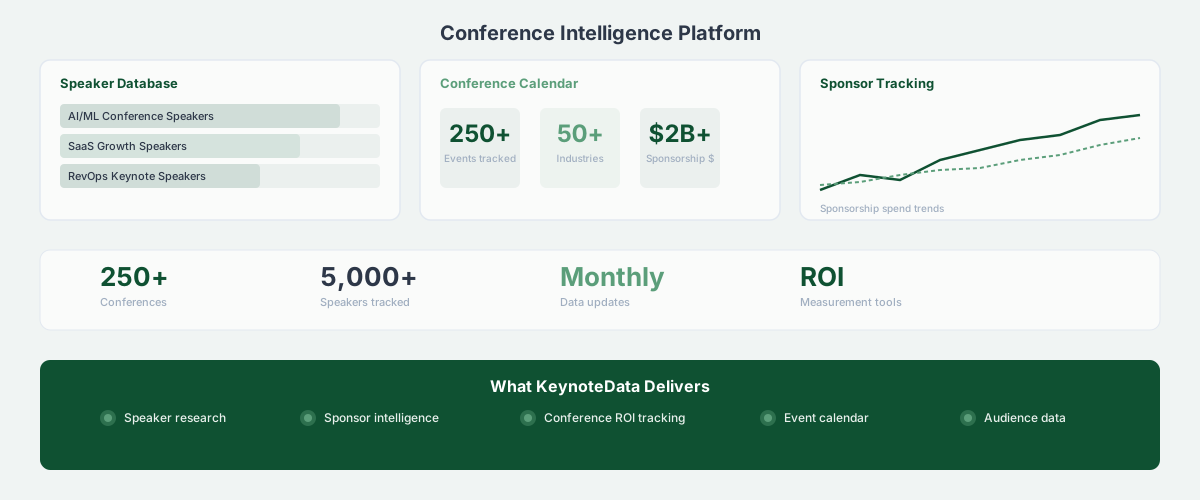
Start by reviewing who is speaking at your upcoming events. The KeynoteData speaker database shows you the full roster by conference, so you can plan which sessions to prioritize for content capture.
A preview of what's in the database.
| Name | Title | Company | Level | Conference(s) | |
|---|---|---|---|---|---|
| Dario Amodei | Co-Founder & CEO | Anthropic | C-Level | INBOUND,Dreamforce | LinkedIn ↗ |
| Yamini Rangan | CEO | HubSpot | C-Level | INBOUND,SaaStr Annual | LinkedIn ↗ |
| Kerry Cunningham | Head of Research & Thought Leadership | 6sense | Head of | INBOUND,6sense Breakthrough | LinkedIn ↗ |
| Olivier Godement | Head of Platform | OpenAI | Head of | INBOUND,Dreamforce | LinkedIn ↗ |
| Aaron Levie | CEO | Box | C-Level | SaaStr Annual | LinkedIn ↗ |
| Mati Staniszewski | Co-Founder & CEO | ElevenLabs | C-Level | INBOUND,Dreamforce | LinkedIn ↗ |
Showing 6 of 887 speakers. Get full access to filter and export.
Full speaker and sponsor data available for these conferences.
887 speakers, 487 sponsors, 13 conferences. Filter, search, and export.